Abstract
The traditional perspective in quantum resource theories concerns how to use free operations to convert one resourceful quantum state to another one. For example, a fundamental and well known question in entanglement theory is to determine the distillable entanglement of a bipartite state, which is equal to the maximum rate at which fresh Bell states can be distilled from many copies of a given bipartite state by employing local operations and classical communication for free. It is the aim of this paper to take this kind of question to the next level, with the main question being: What is the best way of using free channels to convert one resourceful quantum channel to another? Here we focus on the the resource theory of entanglement for bipartite channels and establish several fundamental tasks and results regarding it. In particular, we establish bounds on several pertinent information processing tasks in channel entanglement theory, and we define several entanglement measures for bipartite channels, including the logarithmic negativity and the $ąppa$-entanglement. We also show that the max-Rains information of [Bäuml et al., Physical Review Letters, 121, 250504 (2018)] has a divergence interpretation, which is helpful for simplifying the results of this earlier work.
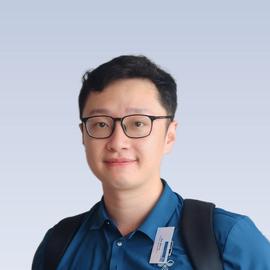
Xin Wang
Associate Professor
Prof. Xin Wang founded the QuAIR Lab at HKUST (Guangzhou) in June 2023. His research aims to advance our understanding of the limits of information processing with quantum systems and the potential of quantum artificial intelligence. His current interests include quantum algorithms, quantum resource theory, quantum machine learning, quantum computer architecture, and quantum error processing. Prior to establishing the QuAIR Lab, Prof. Wang was a Staff Researcher at the Institute for Quantum Computing at Baidu Research, where he focused on quantum computing research and the development of the Baidu Quantum Platform. Notably, he led the development of Paddle Quantum, a Python library for quantum machine learning. From 2018 to 2019, he was a Hartree Postdoctoral Fellow at the Joint Center for Quantum Information and Computer Science (QuICS) at the University of Maryland, College Park. Prof. Wang received his Ph.D. in quantum information from the University of Technology Sydney in 2018, under the supervision of Prof. Runyao Duan and Prof. Andreas Winter. He obtained his B.S. in mathematics (Wu Yuzhang Honors) from Sichuan University in 2014.